
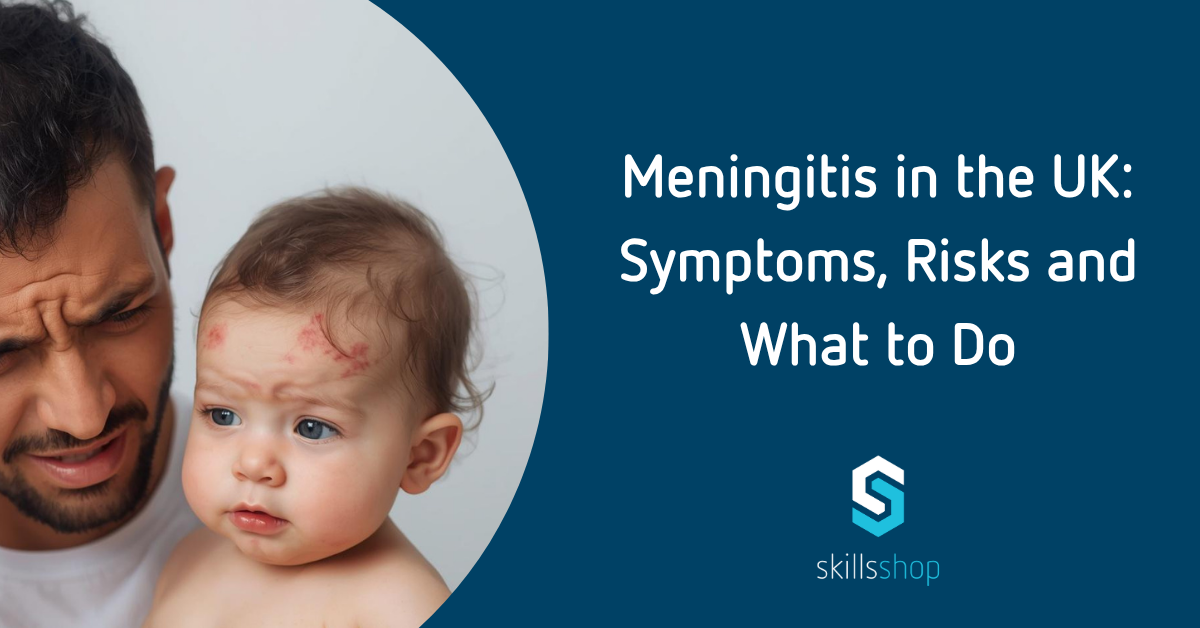
There has been growing concern around a recent rise in cases across the UK, leaving many people asking the same question. Would I recognise the signs quickly enough?
Understanding meningitis symptoms UK is not just for healthcare professionals. It matters for parents, colleagues and anyone responsible for others in a workplace. Symptoms can vary depending on age and can develop very quickly.
Meningitis is serious and in some cases can become life threatening within hours. Knowing what to look for and what action to take is critical.
In this guide, you will learn how to recognise the signs in adults, children and babies, understand the risks, and know exactly what to do if you ever suspect meningitis.
What Is Meningitis and Why Is It So Serious?
Meningitis is an infection that causes inflammation of the protective layers around the brain and spinal cord, known as the meninges. This inflammation can place dangerous pressure on the brain.
The two main types are:
- Viral meningitis
- Bacterial meningitis
Viral meningitis is more common and usually less severe, but it can still make someone very unwell. Bacterial meningitis is far more serious and requires urgent medical treatment.
One of the biggest risks is how quickly it can progress. Early symptoms can feel like flu, but the condition can worsen rapidly. This is why recognising meningitis symptoms UK early is so important.
Meningitis can affect anyone, including adults, children and babies. Each group may show different signs, which is where people often get caught out.
If you suspect meningitis, treat it as a medical emergency. It is always better to act early.
The Recent UK Meningitis Outbreak: What We Know
Recent reports have highlighted a rise in meningitis cases across parts of the UK, particularly affecting certain age groups and environments.
Meningitis can spread through close contact, including coughing, sneezing or sharing items like drinks and utensils.
Key points from recent cases include:
- Higher risk in young people, students and shared living environments
- Symptoms often mistaken for flu in the early stages
- Delays in action increasing the risk of serious complications
The focus should not be on panic, but on awareness. Recognising symptoms early and acting quickly can make a significant difference.
In workplaces, this awareness is especially important as people spend long periods together.
Meningitis Symptoms UK: What to Look Out For
Early meningitis symptoms can look like a common illness, which is why they are sometimes missed. Understanding the warning signs is key.
Symptoms in Adults
- High temperature
- Severe headache
- Stiff neck
- Sensitivity to light
- Feeling or being sick
- Confusion or difficulty concentrating
- Drowsiness or difficulty waking
These symptoms can develop quickly and worsen over a short period of time.
Symptoms in Children
- Cold hands and feet with a high temperature
- Limb pain or unusual aches
- Pale, mottled or blotchy skin
- Being very sleepy or hard to wake
- Irritability or not wanting to be held
- Vomiting
Children may struggle to explain how they feel, so changes in behaviour are often the key indicator.
Symptoms in Babies
- Bulging soft spot on the head (fontanelle)
- High pitched or unusual crying
- Floppy, unresponsive or stiff body
- Refusing feeds
- Vomiting
- Pale or blotchy skin
Babies may not always have a high temperature, which can make symptoms harder to recognise.
Symptoms do not always appear in order, and not everyone will have all of them. If something does not feel right, act early.
The Meningitis Rash and Other Warning Signs
The meningitis rash is widely recognised but does not always appear, especially in the early stages.
When present, it may look like small red or purple spots that do not fade when pressed. This is known as the glass test.
- Press a clear glass firmly against the skin
- If the spots do not fade, this is a warning sign
- If they do fade, continue to monitor symptoms
The rash can be harder to see on darker skin tones, so it should not be relied on alone.
Other serious warning signs include:
- Seizures or fits
- Difficulty breathing
- Unusual drowsiness or being hard to wake
- Confusion or disorientation
- Cold hands and feet with limb pain
- Sensitivity to light
If someone shows a combination of symptoms or rapidly deteriorates, treat it as a medical emergency.
Meningitis First Aid: What To Do If You Suspect It
If you suspect meningitis, act immediately. Do not wait.
- Call 999 straight away
- Explain the symptoms clearly
- Follow instructions from the call handler
While waiting for help:
- Keep the person comfortable
- Do not leave them alone
- Monitor breathing and response levels
- Be prepared to start CPR if needed
Meningitis first aid is about recognising the signs and getting urgent help, not diagnosing or treating the condition.
In a workplace:
- Call emergency services immediately
- Ensure a first aider stays with the person
- Clear access for emergency responders
- Keep communication calm and clear
If in doubt, treat it as serious and act quickly.
What This Means for Workplaces and First Aiders
Meningitis may be rare, but when it happens, it requires immediate action. Awareness in the workplace can make a real difference.
This means:
- Having trained and confident first aiders
- Ensuring staff understand serious illness warning signs
- Encouraging people to speak up if something feels wrong
- Acting without hesitation when emergency help is needed
You do not need medical experts on site. You need awareness and confidence to respond.
The recent UK cases are a reminder of how quickly situations can change. What starts as mild symptoms can escalate fast.
A simple approach for first aiders:
- Recognise the signs
- Respond quickly
- Refer to emergency services
Preparation leads to faster action, and in situations like this, that can save lives.
Summary
- Meningitis is a serious infection that can become life threatening quickly
- Early symptoms can look like flu
- Meningitis symptoms UK vary across adults, children and babies
- The meningitis rash is a warning sign but may not always appear
- Meningitis first aid is about acting fast and calling 999
- Workplaces should focus on awareness, confidence and quick response