
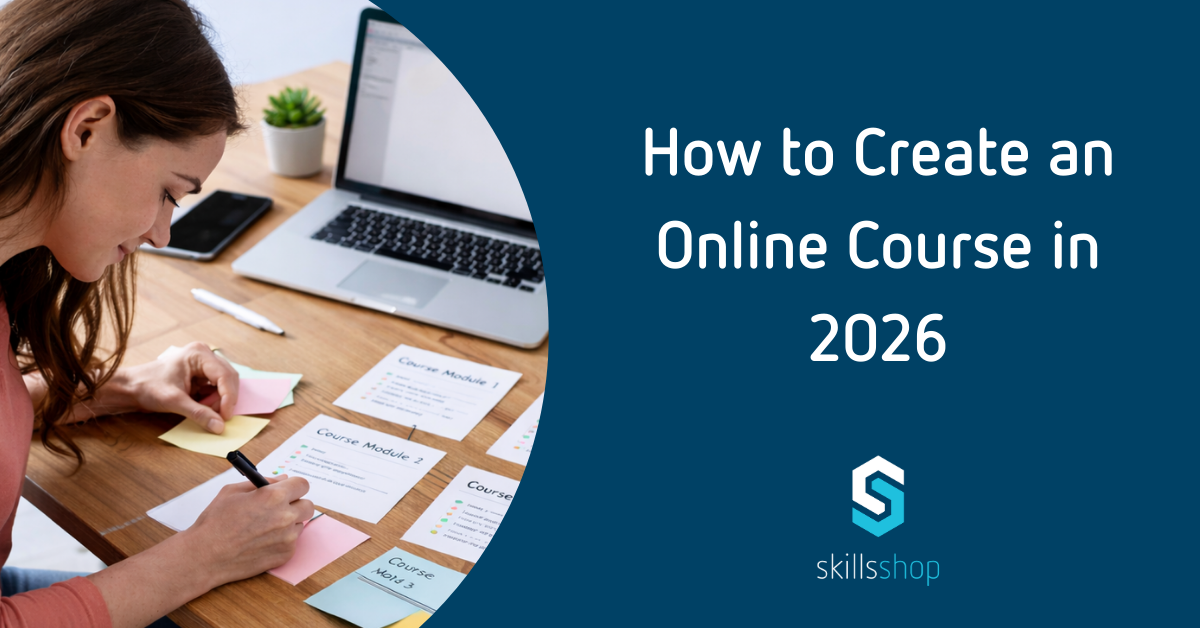
Creating an online course is something many trainers and experts are thinking about right now. Businesses are investing more in digital learning, and people want flexible ways to develop new skills. If you are considering how to create an online course, the opportunity has never been bigger.
The challenge is that many people immediately think about platforms, video equipment, and complicated technology. In reality, the most successful online courses rarely start with tech. They start with a clear outcome and a well planned learning journey.
Whether you run workshops, deliver training, or share expertise with clients, you may already have most of the content you need. The key is knowing how to structure that knowledge into meaningful online learning.
In this guide we will walk through the modern way to create an online course, from planning the learner journey to turning your expertise into engaging online courses people actually complete.
Why More Experts Are Creating Online Courses
More trainers, consultants and professionals are beginning to create an online course as part of their work. What used to feel complicated or technical is now far more accessible. The growth of online learning has opened the door for experts to share their knowledge with far more people than traditional training alone allows.
For many trainers, it starts with a simple realisation. You may be delivering the same workshop again and again. The material works. The outcomes are good. But your time is still limited by how many people you can train in a room.
Online courses allow you to package that knowledge into a digital format that people can access when it suits them. This creates several benefits.
• Learners can study at their own pace
• Organisations can train more people more easily
• Your knowledge becomes a digital asset rather than something that only exists when you are delivering it
This does not mean online learning replaces in person training. In many cases it works best alongside it. Workshops, coaching and live training can then focus on discussion, practice and deeper learning while the core knowledge is delivered through structured online courses.
That is why more professionals are now looking at how they can create an online course that supports their work and expands their reach.
Start With the Outcome Your Learner Wants
One of the biggest mistakes people make when they create an online course is starting with the content they want to teach. Instead, the best place to begin is with the outcome the learner wants to achieve.
Imagine someone completing your course. When they reach the end, what should they be able to do differently?
This simple question helps shape the entire learning experience.
A useful exercise is to imagine you are the ideal participant taking your course. Picture yourself going through each module and activity. Ask yourself what you would want if you were the learner.
For example:
• What problem are you trying to solve?
• What practical skills should you gain?
• What would make the course feel valuable?
• What would keep you engaged from start to finish?
By thinking this way, you start designing the course around the learner rather than the trainer.
This approach is particularly important in online learning. When people take online courses, they often study on their own. That means the structure needs to guide them clearly from one step to the next.
If the learner can see a clear path and a clear outcome, they are far more likely to complete the course and apply what they have learned.
Plan the Structure Before You Touch Any Technology
One of the biggest reasons people struggle when they try to create an online course is because they start with technology rather than structure.
They begin researching platforms, recording equipment, video software and hosting tools before they have even decided how the course will work. This often leads to confusion and unnecessary complexity.
A much better approach is to plan the course on paper first.
Think of your course as a journey the learner is going to take. Your job is to guide them from where they are now to the outcome they want to achieve.
Start by mapping the journey.
For example:
• What do they need to understand first?
• What should they learn next?
• What skills should they practise along the way?
• What should they be able to do by the end?
Once you have the journey clear, you can break it into simple modules.
A typical structure might look like this:
• Module 1 – Introduction and foundations
• Module 2 – Core knowledge
• Module 3 – Practical application
• Module 4 – Real world implementation
When you structure online courses this way, the learning feels organised and logical. It becomes easier for learners to follow and easier for you to build.
Only once this structure is clear should you start thinking about the technology that will host your online learning.
Keep Online Learning Simple and Engaging
When people decide to create an online course, they often feel pressure to make it look highly polished or complicated. In reality, the most effective online learning experiences are usually simple and focused on helping people apply what they learn.
Learners rarely want long lectures or hours of video. What they want is clear guidance, useful insights and practical steps they can put into action.
Good online courses often combine a few simple elements.
For example:
• Short video lessons explaining key ideas
• Downloadable resources or guides
• Practical activities or reflection tasks
• Real world examples that make the learning relatable
Shorter lessons also help learners stay engaged. A series of clear, focused lessons is usually far more effective than one long presentation.
Another helpful approach is to design each module with a clear purpose.
Ask yourself questions like:
• What is the main idea in this lesson?
• What should the learner take away from it?
• What should they do next?
By keeping the learning simple and structured, your course becomes easier to follow and easier to complete.
This is one of the key differences between simply sharing information and creating online courses that genuinely support meaningful online learning.
Avoid the Tech Overwhelm Trap
One of the biggest barriers for trainers who want to create an online course is the technology. Many people feel overwhelmed by the number of platforms, tools and systems available.
You might start searching for answers and quickly find yourself comparing learning platforms, video software, payment systems, hosting options and dozens of other tools.
Before long it can feel complicated.
The important thing to remember is that technology is simply the delivery method. It should support the learning, not control it.
If your course structure is clear and your content is useful, the technology becomes much easier to choose.
A helpful mindset is this.
Focus on teaching first.
Choose technology second.
In most cases you only need a few core pieces in place:
• A platform to host the course
• A way for learners to access the content
• A simple way to organise modules and lessons
Once those foundations are in place, the rest can evolve over time. Many successful online courses started with simple recordings and clear teaching rather than complicated production.
By keeping the focus on learning rather than technology, you can create an online course without feeling overwhelmed by the tech.
Turning Your Existing Knowledge Into an Online Course
Many people assume they need to start from scratch when they want to create an online course. In reality, most trainers and experts already have a large amount of the content they need.
If you deliver workshops, run training sessions or work with clients, you are likely already explaining the same ideas again and again. Those explanations, examples and activities can often form the foundation of your course.
Start by looking at what you already use.
For example:
• workshop slides
• training exercises
• client questions and discussions
• guides, checklists or frameworks you already share
These materials can often be adapted into lessons, modules and downloadable resources inside your online course.
This is why many professionals find that creating online courses is less about inventing new content and more about organising existing knowledge into a clear learning journey.
Over time this process creates something very valuable. Your knowledge becomes a digital asset.
Instead of delivering the same information repeatedly, your expertise becomes structured online learning that people can access whenever they need it.
For trainers, consultants and business owners, this is one of the most powerful reasons to create an online course.
Summary
f you are thinking about how to create an online course, the process is often simpler than many people expect. The key is to focus on the learning experience first and the technology second.
Here are the main ideas to remember.
• Start with the outcome the learner wants to achieve
• Design the course from the learner’s perspective
• Plan the structure before choosing any technology
• Break the course into clear modules and short lessons
• Use simple formats such as videos, resources and practical activities
• Avoid tech overwhelm by focusing on teaching first
• Look at your existing workshops, training or coaching material for content
When approached this way, creating online courses becomes a structured process rather than a technical challenge. Over time your expertise can grow into valuable online learning that supports learners and expands the reach of your knowledge.