
Diabetes
Diabetes is a long-term condition caused by too much glucose (sugar) in the blood.
The pancreas produces the hormone insulin to regulate blood sugar levels by moving the glucose into cells where it is released as energy.
For diabetics, the body is unable to break down the glucose due the pancreas not producing insulin, or not enough.
There are 2 types of diabetes.
Type 1 is where no insulin is produced and the person relies on injections. This is known as insulin-dependent diabetes as normally occurs in children or people under 40.
Type 2 diabetes is more common and 90% of all adults diagnosed with diabetes have this condition. This is where not enough insulin is produced. It can normally be controlled by diet although some people still need to top up their insulin with injections.
HYPERGLYCAEMIA v HYPOGLYCAEMIA
Hyperglycaemia is where the person has too much sugar in their blood. Hypoglycaemia refers to low sugar in the blood.
The signs of each are noticeably different.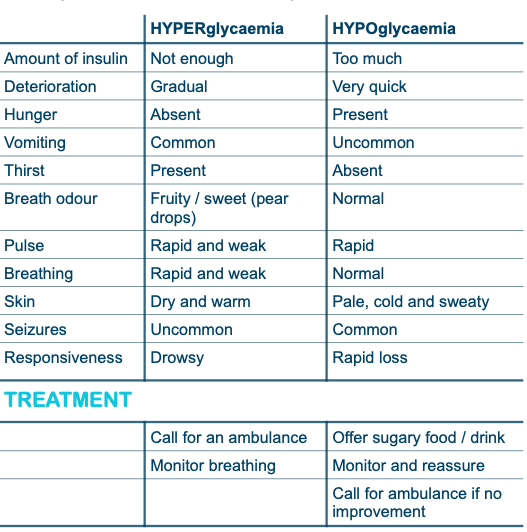 If you’re ever unsure, always treat for HYPOglycaemia.