On-site Training
We come to your workplace and deliver practical training for your team.
Request team quote
Home•Training Courses•Classroom Behavioural Management
Transform your classroom with our Behavioural Management course. Discover strategies to create a positive learning environment and engage every student.

Our Classroom Behaviour Management course equips education professionals with the confidence and practical strategies to create positive learning environments where pupils can thrive. Rather than simply reacting to challenging behaviour, participants learn proactive techniques that encourage engagement, build positive relationships and reduce disruption within the classroom.
By developing effective behaviour management skills, schools and educational settings can improve learning outcomes, increase staff confidence and create a culture built on consistency, respect and positive expectations.
This course is ideal for headteachers, school leaders and managers looking to strengthen behaviour management skills across their organisation.
It is suitable for teachers, teaching assistants, learning support assistants, early years practitioners, cover supervisors and anyone working with children and young people in educational settings. The course is equally valuable for experienced staff looking to refresh their skills and those new to working in education.
Training can be tailored to reflect the age group, setting and behavioural challenges experienced within your organisation.
Our Classroom Behaviour Management course is delivered through interactive presentations, group discussion, practical activities and realistic classroom scenarios based on everyday situations faced by education professionals.
Participants explore proactive behaviour management strategies, effective communication techniques and approaches for building positive relationships with pupils. Through case studies, role play and collaborative problem solving, learners develop practical strategies that can be applied immediately within their own classroom or educational setting.
Training encourages participants to reflect on their own practice while sharing ideas and experiences with colleagues in a supportive learning environment.
Participants are assessed dynamically throughout the course through practical activities, classroom scenarios, group discussion and instructor observation.
Where appropriate, learners will also complete short quizzes and reflective exercises to reinforce learning and confirm their understanding of key behaviour management principles.
Assessment is carried out by a qualified Skills Shop instructor who holds recognised teaching and assessing qualifications together with relevant occupational competence and experience in education and behaviour management. Continuous assessment allows participants to demonstrate their understanding while receiving practical guidance and constructive feedback throughout the course.
Successful participants will receive a Skills Shop Classroom Behaviour Management certificate. We recommend refresher training every three years, or sooner where organisational policies, legislation or recognised best practice changes.
Skills Shop certificates are issued in-house rather than through an external awarding organisation. This allows us to invest in experienced instructors, practical classroom scenarios and high-quality learning resources rather than annual accreditation fees.
Schools and educational providers have a responsibility to provide a safe, inclusive and effective learning environment for both pupils and staff. Providing behaviour management training helps organisations promote positive behaviour, improve staff confidence and support consistent approaches across the whole setting.
Our team is here to help you choose the right course.
We come to your workplace and deliver practical training for your team.
Choose a suitable date through our online diary. It is completely risk free while we prepare your quotation.
Your preferred date is held while you review the quotation. Training is only secured once the quotation has been electronically signed.
Yes. We deliver workplace training across the UK at your premises or another suitable venue.
Tell us your group size and we will recommend the most practical arrangement for your team.
Dates depend on availability, but training can often be arranged within a few weeks. We will always try to help with urgent requests.
We provide practical, engaging training delivered by experienced instructors. Our straightforward, no-pressure booking process means you only commit when you are ready.
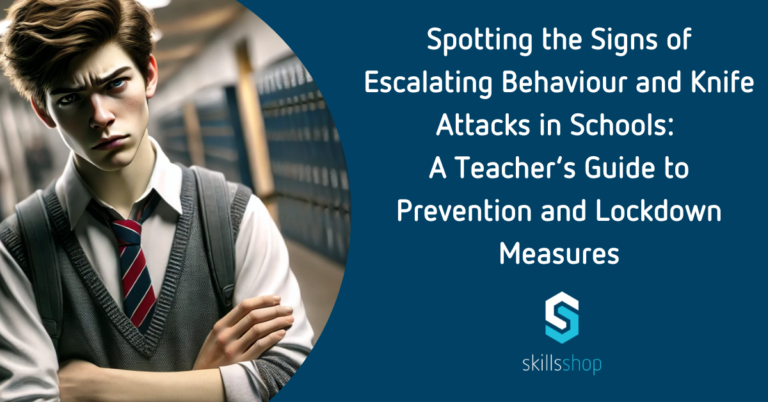
Recognizing and responding to escalating student behaviour can be the key to preventing knife attacks in schools. From verbal threats to physical…
Read article→
Explore the value of tailored courses: expert-led training beyond traditional standards
Read article→
Read why it's critical your staff are trained in conflict management when dealing with customer complaints in hospitality...
Read article→Handy links